Value Investing: A Strategic Approach to Building a $100,000 Portfolio
Table of Contents

Check out the full video on YouTube, if you prefer reading however, keep scrolling.
Today, I want to delve into the principles of value investing, a strategy that has stood the test of time and has been a cornerstone of my investment philosophy since I began investing in 2002. Over the years, I’ve achieved significant success, particularly since launching my research platform in 2018, where my portfolio has consistently outperformed the market.
Value investing is not just about picking stocks; it’s about understanding the intrinsic value of a company, managing risk, and aligning your investments with your long-term financial goals. Let’s explore how to start value investing, what to look for in value investments, and how to build a $100,000 portfolio using this strategy.
What is Value Investing?
At its core, value investing is about buying businesses at a price below their intrinsic value. This approach requires patience, discipline, and a focus on long-term growth rather than short-term market fluctuations. The key question every value investor must answer is: What is a company truly worth?
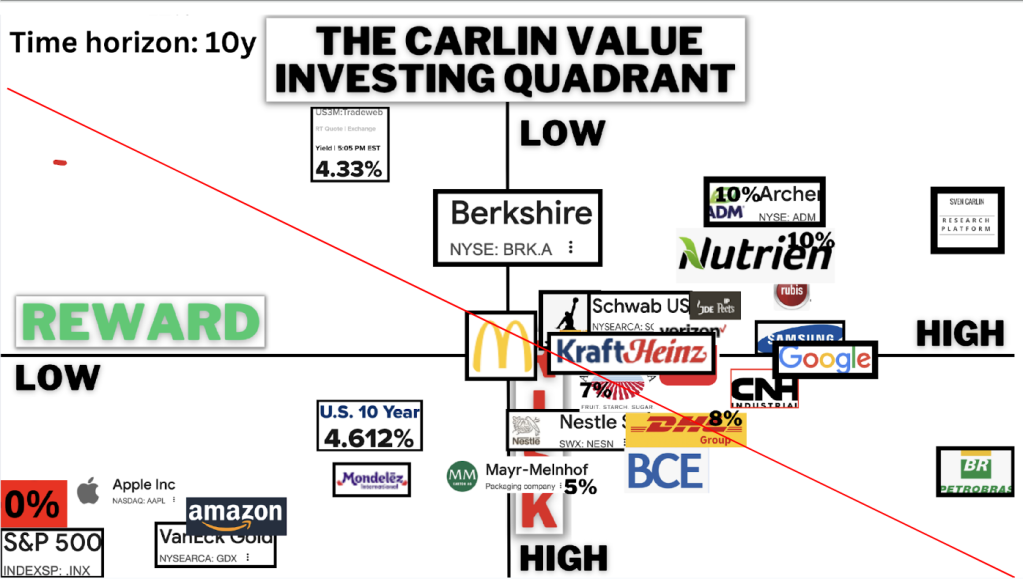
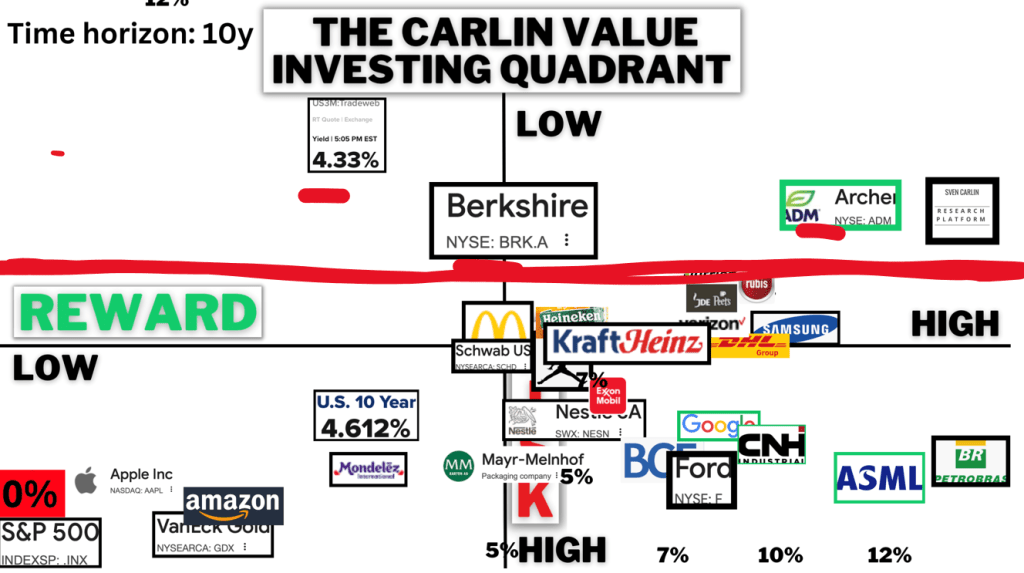
Value Investing Risk & Reward Quadrant (check all the stock analyses)
For example, consider Facebook (now Meta). Its stock price has swung dramatically, from $400 to $90, and now to $736. What is its real value? Value investing provides a framework to answer this question by focusing on intrinsic value—the true worth of a business based on its fundamentals, such as earnings, cash flow, and growth potential.
Value investing is not about chasing benchmarks or comparing yourself to the market. Instead, it’s about achieving your desired rate of return while minimizing risk. As Warren Buffett famously said, “Price is what you pay; value is what you get.”
The Key Drivers of Value Investment Returns
- Intrinsic Value: This is the true worth of a company, calculated based on its financial health, growth prospects, and competitive advantages.
- Margin of Safety: Buying a stock at a significant discount to its intrinsic value reduces risk and increases potential returns.
- Long-Term Focus: Value investing is a marathon, not a sprint. It requires patience and a commitment to holding investments through market cycles.
- Growth at a Reasonable Price (GARP): Growth is a component of value, but it must be purchased at the right price. Overpaying for growth can lead to poor returns.
Building a $100,000 Value Portfolio
Let’s break down how to allocate $100,000 using a value investing approach. The goal is to build a diversified portfolio with limited downside risk while achieving a minimum annual return of 10%.
1. U.S. Treasuries (Low Risk)
- Allocation: $90,000
- Yield: 4.3% (3-month Treasury)
U.S. Treasuries are a safe haven for value investors. Even Warren Buffett has allocated a significant portion of Berkshire Hathaway’s cash to Treasuries. This provides stability and liquidity while you wait for attractive opportunities in the stock market.
2. Berkshire Hathaway (Moderate Risk)
- Allocation: $5,000
- Rationale: Berkshire Hathaway is a low-risk, high-quality business with a proven track record of compounding value over decades. While it may be slightly expensive now, it remains a solid long-term investment. If the stock price drops by 30%, consider buying more to lower your average cost.
3. Archer Daniels Midland (ADM) (Moderate Risk)
- Allocation: $5,000
- Rationale: ADM is currently trading at $46, down from nearly $100. While it could drop further in the short term, it offers a attractive dividend yield. If the price falls to $30, the yield would rise to 6.5%, making it an even more compelling investment. Reinvesting dividends over time can significantly enhance returns.
Managing Risk and Achieving Your Desired Rate of Return
Value investing is about managing risk and ensuring that your portfolio aligns with your financial goals. Here are some key principles to follow:
- Diversification: For novice investors, a portfolio of 10-20 positions is ideal. This reduces risk while allowing you to learn and refine your strategy.
- Reinvesting Dividends: Reinvesting dividends from stocks like ADM can accelerate compounding and boost long-term returns.
- Buying on Dips: If high-quality stocks like Berkshire or ADM drop significantly, view it as an opportunity to buy more at a discount.
- Focus on Ownership: When you invest in a company, you become an owner. Ask yourself: How am I rewarded for owning this business? This mindset helps you stay focused on long-term value creation.
The Importance of a 10% Minimum Return Goal
In today’s market, aiming for a minimum annual return of 10% is crucial. Falling below this threshold increases the risk of underperforming other financial obligations, such as paying off student loans with 7% interest. While U.S. Treasuries offer a safe 4.3% yield, they should be a temporary holding until better opportunities arise.
Why Value Investing Works
Value investing is a disciplined, long-term strategy that avoids the pitfalls of market speculation. By focusing on intrinsic value, margin of safety, and compounding, you can build a portfolio that delivers consistent returns without taking excessive risks.
As I often say, value investing is not just about picking stocks—it’s about intelligent investing over a lifetime. By following this approach, you can create a “brick-by-brick” portfolio that grows steadily and helps you achieve your financial goals.
Final Thoughts
Value investing is not about chasing the latest market trends or trying to time the market. It’s about understanding what you own, paying a fair price, and letting the power of compounding work in your favor. Whether you’re a novice or an experienced investor, the principles of value investing can help you build a portfolio that stands the test of time.
What is value investing?
Value investing is focused on finding opportunities where you can’t lose and where if things go bad, you do ok, while if things go well, you do great. To find such investments, you need to understand what is the intrinsic value of the business and how to find a margin of safety.
How much should you expect as an investing return goal?
When it comes to value investing, I think one should go for and invest only if returns are above 10%, if there aren’t such opportunities around, it is better to put a new kitchen or travel the world with the extra money, as the risk is then high and reward low.
Should you reinvest dividends?
Generally, reinvesting dividends leads to faster compounding, so if there are good opportunities, it is always good to reinvest dividends.