Lululemon vs. Nike: Which Stock Offers Better Long-Term Value?
You can watch the full video discussing Lululemon and NIKE here:
Investor interest in athletic apparel has surged in 2024, with both Nike and Lululemon drawing attention for very different reasons. Nike is navigating a turnaround under new leadership, while Lululemon faces questions about brand strength and profitability despite appearing undervalued on a price-to-earnings (P/E) basis. This analysis compares the two companies to determine which, if either, offers long-term value for investors.
Nike: A Turnaround Story in Progress
Over the past five years, Nike’s stock is down 31%, largely due to pandemic-driven overvaluation followed by a revenue decline. Most recently, Nike reported a 10% drop in revenues and a 50% fall in net income, shrinking from around $6 billion in profitability to $3 billion. Margins have compressed, and investor sentiment has weakened.
Despite this, optimism is growing. Hedge fund manager Bill Ackman has taken a significant position, and analysts such as JPMorgan’s Matthew Boss recently upgraded the stock to Overweight. Nike’s new CEO, Eliud Hill, is betting on new franchises like the Vomero 18 and high-profile athlete endorsements to reignite growth.
From a valuation standpoint, Nike’s P/E ratio remains elevated, reflecting expectations of recovery. If the company can return to historical levels of high-single-digit revenue growth and mid-teens profit margins, profits could rebound to $6 billion, potentially justifying a stock price of $120–150. However, a more conservative scenario suggests only modest returns, with risks stemming from fierce competition and slowing consumer demand.
For value investors, Nike presents a high-risk, moderate-reward proposition—a potential turnaround story, but with limited margin of safety.
Lululemon: Cheap but Facing Brand Risks
Lululemon’s stock tells a different story. Shares are down more than 50% from recent highs, leaving the company trading at a P/E ratio near 13, significantly below Nike. At first glance, this appears attractive for value-oriented investors.
The fundamentals show resilience. Revenues continue to grow, supported by global expansion and new store openings. Gross margins remain exceptionally strong at 59%, far above Nike’s mid-40% range. Yet risks have mounted:
- Inventory levels have risen, raising concerns of markdowns.
- Tariffs and U.S. demand weakness are expected to pressure profits.
- 75% of sales come from the U.S., where growth is now slowing.
- Anecdotal evidence suggests declining product quality, which could erode brand equity.
Investor sentiment has soured, with analysts cautious about Lululemon’s ability to sustain premium margins. While intrinsic value models suggest potential upside to $200–300 per share in a bullish scenario, the downside risk remains significant if growth stalls and valuation multiples compress further.
In short, Lululemon looks cheaper than Nike, but the risks tied to fashion trends, brand perception, and consumer behavior make it a speculative rather than value investment.
Nike vs. Lululemon: The Value Investing Lens
Both companies highlight the challenges of investing in consumer-facing brands:
- Nike offers stability and scale, but its recovery depends on restoring growth in a competitive environment.
- Lululemon offers lower valuation multiples, but its brand-driven business model exposes it to shifts in consumer sentiment and fashion cycles.
From a strict value investing perspective, neither stock offers a compelling margin of safety. Nike’s potential turnaround is already priced in, while Lululemon’s discounted valuation may reflect deeper, structural risks.
For investors seeking growth through consumer discretionary stocks, these names may warrant tactical positions. But for long-term, conservative value investors, the risk-to-reward trade-off remains unappealing.
Conclusion
Nike and Lululemon are both at crossroads. Nike is betting on a turnaround after significant declines in revenue and profitability, while Lululemon faces brand and demand challenges despite trading at attractive multiples. Investors with a higher risk appetite may find opportunities in either, but both remain speculative bets rather than true value investments.
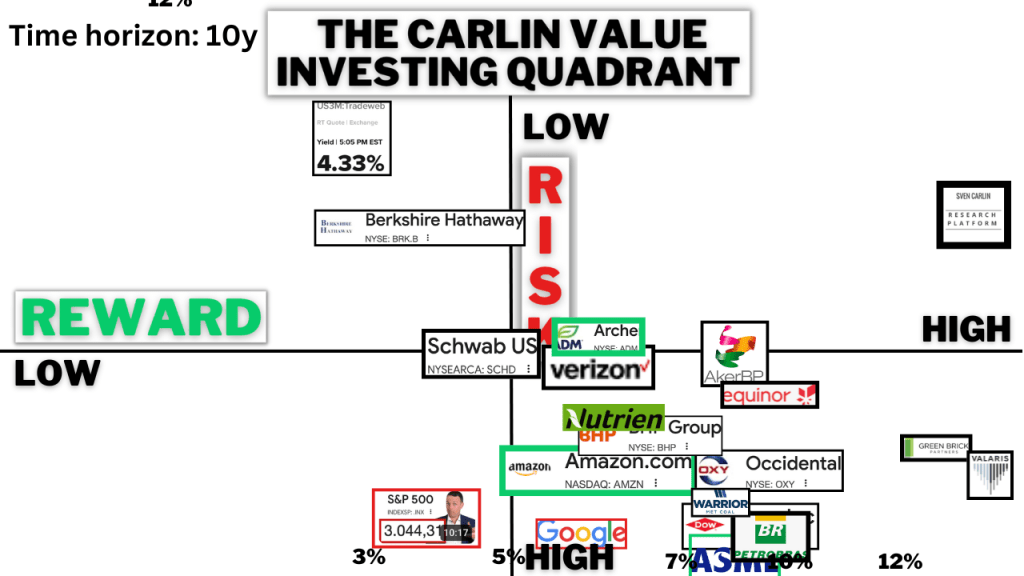
Value Investing Risk & Reward Quadrant (check all the stock analyses)