CNH Industrial: A Cyclical Play in the Agriculture and Construction Equipment Sector
Contents:
CNH Stock
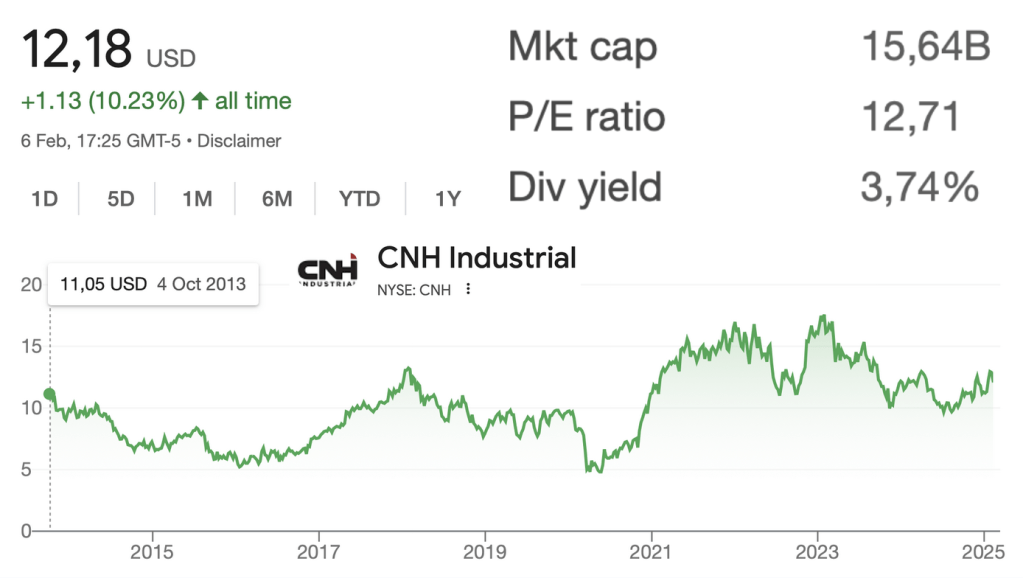
CNH Industrial (NYSE: CNH), a leading player in the agriculture and construction equipment industry, has recently released its quarterly earnings, prompting a reassessment of its investment thesis. The company, known for its iconic brands like Case and New Holland, operates in a highly cyclical industry tied to global food prices and agricultural demand. With the recent downturn in the agricultural cycle, CNH’s financial performance has taken a hit, but the long-term outlook remains intriguing for value investors. This article delves into the company’s business overview, cyclical dynamics, financial performance, and valuation to determine whether CNH Industrial is a buy at current levels.
Business Overview
CNH Industrial is primarily an agriculture and construction equipment manufacturer, with a significant presence in the global farming sector. The company’s key brands, Case and New Holland, are well-established in the market, alongside smaller brands that contribute to its diversified portfolio. The agriculture segment is heavily influenced by food prices, which drive farmers’ purchasing decisions. When food prices are high, farmers are more likely to invest in new equipment to boost productivity and profitability. Conversely, low food prices lead to reduced equipment purchases, creating a cyclical pattern that impacts CNH’s revenues and profitability.
The company also has a financial services arm that provides financing for equipment purchases. This segment has remained relatively stable, but it introduces additional risks, particularly if farmers face financial difficulties and default on their loans.

Cyclical Dynamics and Recent Performance
The agricultural equipment industry is currently in a downturn, driven by declining food prices and reduced farmer incomes. CNH’s recent earnings reflect this challenging environment. Consolidated revenues for the quarter fell by 28%, with EBIT down 71% and net income declining by 70%. Diluted earnings per share dropped to just 14 cents, a significant decline from previous quarters. These results are consistent with the cyclical nature of the industry, where downturns can lead to sharp declines in profitability.

To manage the downturn, CNH has focused on reducing inventory and cutting costs. The company has achieved $600 million in annual run-rate savings and is lowering production hours to align with reduced demand. However, these measures have not been enough to offset the broader industry decline. The company expects the downturn to continue into 2025, with revenues projected to decline by 18-20% in the coming year.
Financial Services and Construction Segment
CNH’s financial services segment has remained stable, with delinquencies at reasonable levels. However, this segment is not immune to the broader industry downturn. If food prices continue to decline, farmers may face financial stress, leading to higher delinquencies and potential losses for CNH.
The construction equipment segment has also been impacted by lower demand, particularly in the U.S. Margins in this segment have remained stable, but revenues have declined significantly. The company expects this trend to continue in the near term, with no immediate signs of recovery.
Outlook and Strategic Priorities
Looking ahead, CNH Industrial is focused on managing the downturn while positioning itself for future growth. The company plans to continue investing in technology and digitalization, with over $1 billion allocated to organic growth initiatives. Despite the challenging environment, CNH maintains an investment-grade credit rating and remains committed to returning capital to shareholders through dividends and share repurchases. However, the company has indicated that dividend payouts may be reduced in line with lower net income.
Management expects the industry to reach a trough in 2025, with potential stabilization in the latter part of the year. However, the timing and magnitude of the recovery remain uncertain, given the volatile geopolitical environment and potential changes in trade policies, such as tariffs.
Valuation and Risk-Reward Analysis
From a valuation perspective, CNH Industrial appears to offer a long-term return potential of 10-11%, based on a discounted cash flow (DCF) analysis. The stock is currently trading at a level that reflects the cyclical downturn, but for value investors, this could present an opportunity to build a position at attractive prices. Historically, cyclical stocks like CNH can deliver outsized returns when purchased at the bottom of the cycle, but timing is critical.
The company’s intrinsic value is estimated at $13 per share, based on a 5% long-term growth rate, a 10% discount rate, and a terminal multiple of 15x earnings. While the stock is not a screaming buy at current levels, it offers a reasonable entry point for investors with a long-term horizon. The cyclical nature of the business introduces higher risk, but for those willing to be patient, CNH could deliver strong returns as the industry recovers.

Value Investing Risk & Reward Quadrant (check all the stock analyses)
Conclusion
CNH Industrial is a classic cyclical play, with its fortunes tied to the ebbs and flows of the agricultural and construction equipment markets. The company is currently navigating a challenging downturn, but its strong brand portfolio, cost-saving initiatives, and strategic investments position it well for the eventual recovery. For long-term investors, CNH offers a compelling risk-reward profile, particularly if the stock price declines further in 2025. While the near-term outlook remains uncertain, the structural growth tailwinds in the agriculture sector and the company’s commitment to innovation make CNH a stock worth watching.
As always, investors should approach cyclical stocks with caution, ensuring they have a clear understanding of the industry dynamics and the potential for prolonged downturns. For those willing to embrace the cyclicality, CNH Industrial could be a rewarding addition to a diversified portfolio.