Coal Stocks: A Deep Dive into the Risk and Reward of Investing in a Controversial Sector
The coal industry, often viewed as a relic of the past, continues to play a critical role in global energy and steel production. Despite the push toward renewable energy and environmental, social, and governance (ESG) initiatives, coal remains a vital resource, particularly in emerging markets like India and China. For investors, coal stocks present a unique opportunity—high cyclicality, significant downside risks, and the potential for substantial upside during commodity booms. In this article, we’ll explore the current state of the coal market, analyze three key coal stocks, and evaluate the risk-reward dynamics of investing in this controversial sector.
If you want to learn about the coal sector and coal stocks more in depth, watch the full video here:
The Current State of the Coal Market
Coal prices have experienced significant volatility over the past few years. The pandemic-induced downturn in 2020 was followed by an unprecedented boom, driven by supply chain disruptions and surging energy demand. However, prices have since moderated, with thermal and metallurgical coal (used for steel production) trading well below their peaks.

- Thermal Coal: Prices have stabilized at levels approximately 50% higher than pre-pandemic lows, reflecting inflationary pressures and increased production costs.
- Metallurgical Coal: Prices have also declined from their highs but remain above historical lows. The current oversupply, mild winters, and subdued demand from China have contributed to weaker prices.
Despite the short-term challenges, long-term demand for coal—particularly metallurgical coal—is expected to remain robust. India’s growing steel production and infrastructure development are key drivers, while China’s demand, though slowing, remains substantial. However, the industry faces headwinds, including ESG pressures, underinvestment in new production, and competition from alternative energy sources.
Key Coal Stocks to Watch
We’ll examine three coal companies: Alpha Metallurgical Resources, CONSOL Energy, and Warrior Met Coal. Each offers a unique risk-reward profile, reflecting their cost structures, growth prospects, and exposure to market dynamics.
1. Alpha Metallurgical Resources (NYSE: AMR)
Alpha Metallurgical Resources is a leading producer of metallurgical coal. The company has navigated significant challenges, including near-bankruptcy during the 2020 coal price collapse. However, the subsequent boom allowed Alpha to pay down debt, accumulate cash, and initiate aggressive share buybacks.
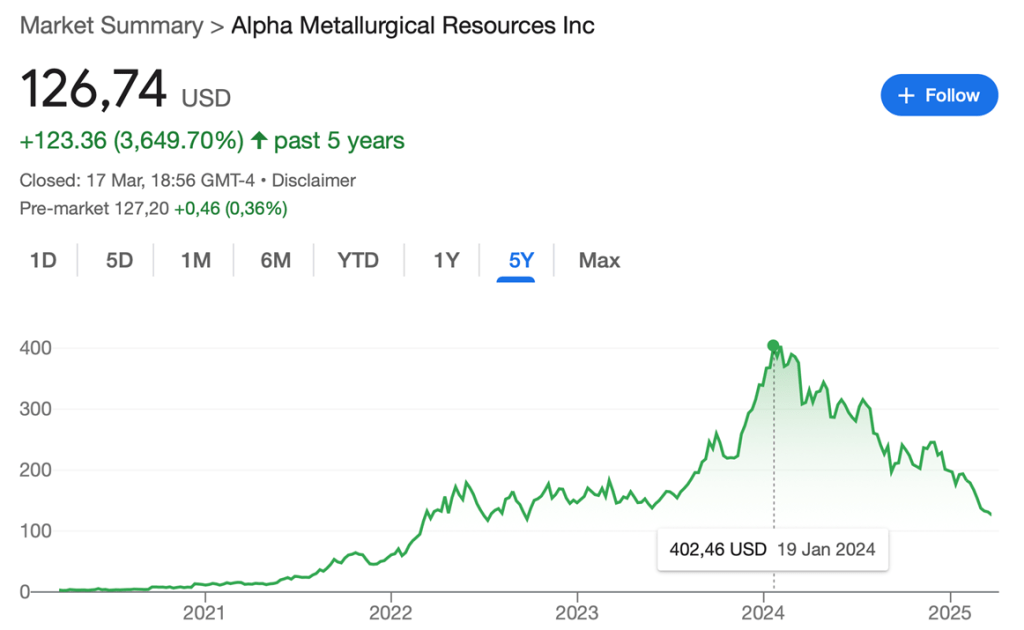
- Recent Performance: The stock has declined by 70% from its peak, reflecting lower coal prices and reduced profitability. In the most recent quarter, Alpha reported a net loss of $2 million, down from $176 million in profits a year earlier.
- Outlook: Alpha’s profitability is highly sensitive to coal prices. At current levels, the company is barely breaking even. However, its strong balance sheet ($519 million in liquidity) provides a buffer against further price declines.
- Risk-Reward: Alpha’s stock is a high-risk, high-reward play. A recovery in coal prices could lead to significant upside, but further declines could pressure the company’s financial position.
2. Core Natural Resources (NYSE: CNR)
Core Natural Resources is a diversified coal producer with a focus on low-cost operations. The company has recently merged with another producer to achieve synergies and improve its cost structure.

- Recent Performance: Core Natural Resources’ stock is down approximately 50% from its peak. The company has returned $1.8 billion to shareholders through dividends and buybacks during the recent boom.
- Outlook: Core Natural Resources’ low-cost operations provide a margin of safety in a weak pricing environment. However, profitability remains subdued, with the company expected to generate around $200 million annually at current prices.
- Risk-Reward: Core Natural Resources is a more stable option compared to Alpha, but its upside potential is also more limited. The stock is best suited for investors seeking exposure to coal with lower volatility.
3. Warrior Met Coal (NYSE: HCC)
Warrior Met Coal is a growth-oriented metallurgical coal producer with a focus on expanding production capacity. The company is investing heavily in a new project that is expected to increase output by 75%.
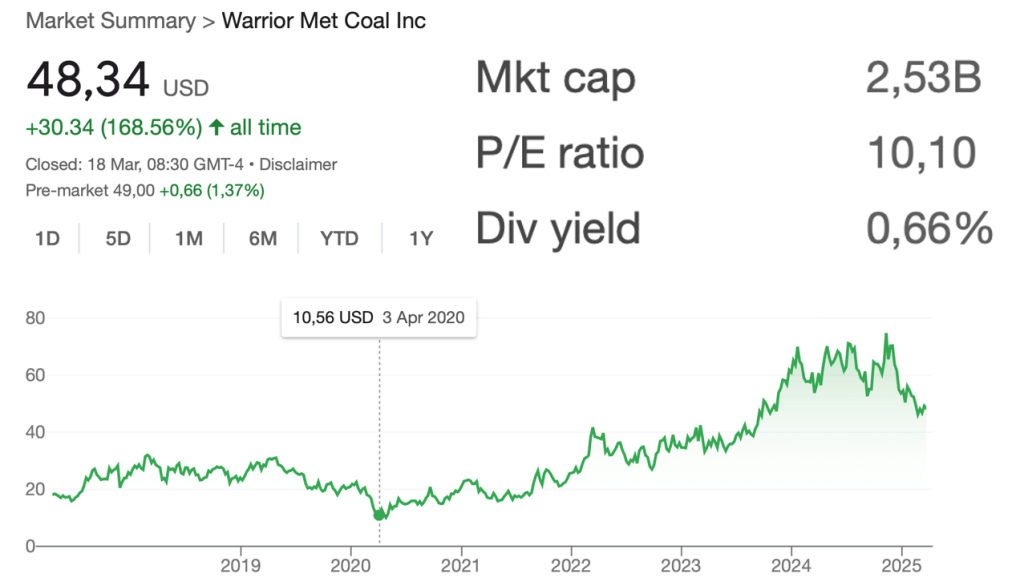
- Recent Performance: Warrior’s stock has held up better than its peers, reflecting its growth prospects and low-cost operations. The company has minimal debt and is funding its expansion internally.
- Outlook: Once the new project is completed, Warrior is expected to generate significant free cash flow—potentially $500 million annually at current prices. This represents a 20% free cash flow yield based on the current market capitalization.
- Risk-Reward: Warrior offers the best combination of growth and stability in the coal sector. Its low-cost operations and expansion plans position it well for the next coal boom.
The Coal Outlook: Demand, Supply, and ESG Pressures
The long-term outlook for coal is shaped by several key factors:
- Demand Growth: India’s rising steel production and infrastructure development are expected to drive demand for metallurgical coal. While China’s demand may decline slightly, global steel consumption is projected to grow over the next decade.
- Supply Constraints: Underinvestment in new coal production has created a supply deficit, which could lead to higher prices in the future. Many producers are reluctant to invest due to ESG pressures and financing challenges.
- ESG Pressures: The global push toward renewable energy and carbon neutrality has made coal a pariah in many investment portfolios. However, coal remains essential for steel production and energy generation in developing countries.
Investment Considerations
Investing in coal stocks requires a nuanced approach. Here are some key considerations:
- Cyclicality: Coal stocks are highly cyclical, with prices and profitability tied to global economic conditions. Investors must be prepared for significant volatility.
- Cost Structure: Low-cost producers like Warrior Met Coal and CONSOL Energy are better positioned to weather downturns and capitalize on price recoveries.
- ESG Risks: The stigma associated with coal could limit institutional investment and financing options. However, this also creates opportunities for contrarian investors.
- Timing: Coal stocks are best bought during periods of pessimism and low prices. The current environment, with prices near the 90th percentile of production costs, may present an attractive entry point.
Conclusion: Is Coal a Good Investment?
Coal stocks offer a compelling risk-reward proposition for investors willing to navigate the sector’s challenges. While ESG pressures and cyclical risks are significant, the long-term demand for coal—particularly metallurgical coal—remains robust. Companies like Warrior Met Coal, with low-cost operations and growth potential, are particularly attractive.
For investors, the key is to approach coal stocks with caution, focusing on low-cost producers and maintaining a long-term perspective. While the sector may not align with ESG principles, it presents an opportunity for substantial returns during commodity booms.

Value Investing Risk & Reward Quadrant (check all the stock analyses)